

Characteristics of Central Venous Catheters
Features and Applications of Central Venous Catheters
Central venous catheters (CVCs) play a critical role in medical practice, widely used for intravenous infusions, administration of analgesics or chemotherapy drugs, dialysis, and parenteral nutrition. Depending on their specifications, CVCs meet diverse clinical needs, providing safe and effective treatment options for patients. This is one reason why high-quality CVCs with excellent after-sales service are highly valued in the medical industry. This article details the key features of CVCs and their latest advancements.
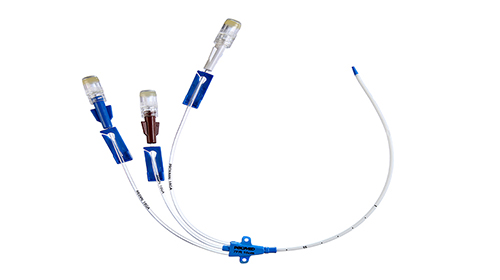
1. Specialized Structure and Smart Design
Professional CVCs feature a unique structural design that facilitates rapid access to large veins, enabling healthcare providers to monitor central venous pressure while reducing the need for repeated punctures, thus minimizing patient discomfort. In 2025, advanced CVCs integrate smart sensors to monitor blood flow and detect catheter occlusion risks in real time, enhancing treatment safety. This design provides efficient support for critical care and long-term therapy.
2. Advanced Materials and Antibacterial Technology
CVCs are typically made from silicone or polyurethane (PU), materials known for excellent biocompatibility that protect the vascular wall and are suitable for long-term use. Recent developments in antibacterial coatings, such as chlorhexidine or silver-ion coatings, have significantly reduced catheter-related bloodstream infections (CRBSI), with studies showing a reduction of approximately 30%. Additionally, experimental CVCs are exploring biodegradable materials to minimize
complications like thrombosis, indicating promising future directions.
3. Precise Positioning and Imaging Guidance
CVCs offer precise positioning, enhanced by ultrasound guidance and magnetic navigation technologies, which improve placement success rates and reduce complications such as pneumothorax or arterial puncture. In 2025, AI-assisted ultrasound imaging systems further optimize positioning accuracy and reduce procedure times. This is particularly beneficial for dialysis patients and those with complex anatomies, while also alleviating workload for healthcare providers.
Conclusion
According to the latest medical research, CVCs continue to evolve, offering significant benefits in reducing patient discomfort and supporting recovery. Advances in antibacterial technology, smart monitoring, and precise positioning have made CVCs indispensable in critical care, oncology, and dialysis. However, given the specialized nature of CVC applications, procurement officers must consider brand reputation, product certifications, and after-sales support to ensure the selection of high-quality CVCs tailored to clinical needs.

 Teams
Teams