

Selection of Central Venous Catheters
Central venous catheters (CVCs) may be unfamiliar to many, but they are well-known to families of critically ill patients and emergency physicians, as they are primarily used for high-risk patients. The quality of a CVC directly impacts whether subsequent treatments can proceed smoothly, making the selection of a suitable, high-quality catheter critical.
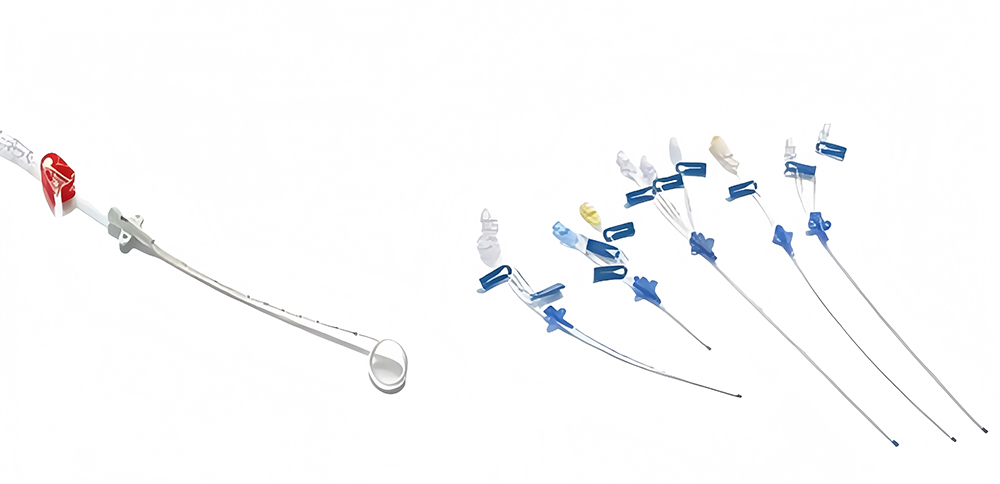
As an infusion pathway, a CVC ensures the success of various clinical treatments. Critically ill patients face severe conditions, requiring multiple interventions that often involve repeated punctures. A CVC eliminates the pain of repeated punctures and facilitates drug delivery, with intravenous administration being a primary method. In essence, the CVC serves as a lifeline for patients.
Thus, choosing a high-quality CVC is paramount. A CVC comprises components like the catheter and guidewire. Since it is inserted into human veins, its compatibility and ability to avoid damaging the body are crucial. For example, the catheter tip, which leads the way, allows drugs to enter the vein. A rounded, flexible catheter tip is essential to prevent vascular damage during insertion. Additionally, the size and position of the catheter’s side holes are critical, as their accuracy affects drug infusion and prevents drug incompatibility issues. The guidewire should ideally be “J”-shaped with clear depth markings to accurately gauge insertion depth. Most importantly, the material of the catheter matters. Ordinary materials can cause thrombosis or endothelial damage, whereas newer polyurethane materials offer better biocompatibility and flexibility.
Currently, CVCs remain a cornerstone of clinical practice. They not only provide a vital lifeline for critically ill patients but also offer hope to their families. Advances in such medical technologies have extended human lifespans, and continued progress is essential to overcoming diseases.

 Teams
Teams