

Which veins are more suitable for central venous catheter placement?
Many people are familiar with the functions, benefits, and applications of central venous catheters, which can be placed in large veins to assess circulatory physiological parameters. There are numerous reputable manufacturers producing high-quality central venous catheters. Here is a brief explanation of which veins are more suitable for central venous catheter placement:
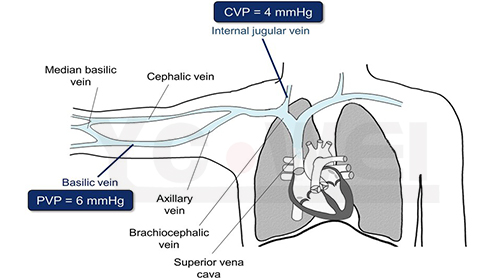
1. Internal Jugular Vein
The catheter body of a central venous catheter is made using special techniques, and placing it in the internal jugular vein can effectively alleviate abnormal jugular vein conditions. The midline puncture point is mainly located within the carotid triangle, the anterior puncture point is outside the carotid artery pulsation, and the posterior puncture point is at the intersection of the posterior edge of the sternocleidomastoid muscle and the external jugular vein.
2. Subclavian Vein
Medical experts indicate that central venous catheters are also suitable for placement in the subclavian vein. The puncture point is typically the intersection of the right clavicular midline and the sternoclavicular joint horizontal line. These catheters have good biocompatibility and cause no damage even when left in the subclavian vein for extended periods. However, during puncture procedures, operators should wear sterile clothing and gloves to avoid contaminating the catheter.
3. Femoral Vein
Feedback suggests that most femoral vein catheterizations also use central venous catheters. These catheters are made with patented puncture guidewire designs, improving the success rate of femoral vein punctures. For femoral vein access, a three-finger positioning method can be used: the index and middle fingers of the left hand locate the femoral artery, and the needle is inserted 0.5 cm medial to it. This positioning method is relatively simple and accurate.
Central venous catheters are widely used in various veins due to their versatile functions. Especially reliable central venous catheters are essential tools in anesthesiology, emergency departments, and ICU wards. According to experts, besides the internal jugular vein, central venous catheters are also suitable for placement in the subclavian and femoral veins.

 Teams
Teams